rhinoplasty in Iran is one of the most common plastic surgeries in the world. There are some factors which must be taken into account before rhinoplasty in Iran.
1.Talk to the surgeon about rhinoplasty in Iran
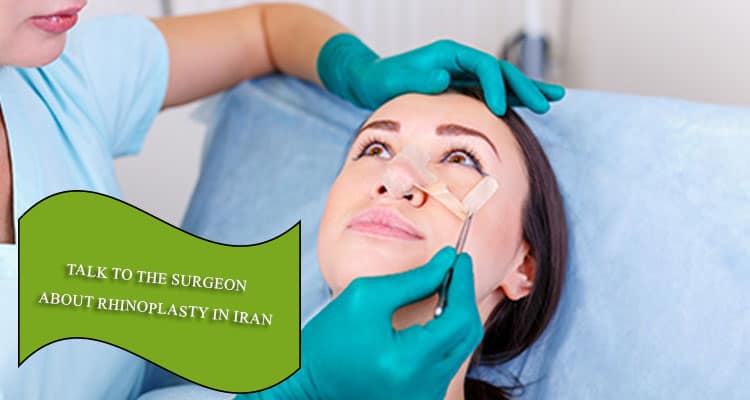
An initial consultation with a physician is an integral part of any plastic surgery in Iran. To ensure that your procedure goes well, you should make the most of this opportunity.
In addition to being straightforward about your medical history, the medications you are taking, and the counter-indications you are aware of, ask your doctor the following questions about rhinoplasty in Iran:
1.How many years of experience do you have in nose job in Iran?
2.How many nose job in Iran surgeries have you performed?
3.Am I a good candidate for rhinoplasty in Iran?
4.Where will you do this surgery?
5.How will the nose surgery be performed?
6.What surgical procedure do you recommend for my case?
7.How long does recovery take?
8.What happens if complications occur?
9.What options do I have if I am not satisfied with the results of this plastic surgery in Iran?
10.Can I look at before and after photos of your patients?
11.Can I watch a video of a rhinoplasty you have performed?
12.What type of anesthesia will I be under?
Feel free to ask all of the questions you have regarding the surgery. Nose job in Iran can be a life-changing procedure (in a good way) so there is no problem in being fully prepared.
2. Get ready for recovery of rhinoplasty in Iran
It takes about 7 to 14 days for you to resume your normal activities after rhinoplasty in Iran. You will experience swelling and bruising immediately after this plastic surgery in Iran. You may prefer to stay home for a few days after the operation, or at least until the cast is removed.
To ensure a speedy recovery, consider making a few preparations:
1.Save medical supplies
Ask your surgeon about any medications you may need after surgery and buy them in advance. Fill all required prescriptions.
2.Buy food and drink before rhinoplasty in Iran
Make sure you have enough water and healthy snacks to ensure proper nutrition and hydration after this plastic surgery in Iran and “rhinoplasty in Iran”.
3.Arrange child and pet care
Ask someone to help you with children and pets at least 24 hours after the operation.
4.Prepare practical clothing
think about buying loose or button-up shirts. Wearing clothes over your head can be uncomfortable.Ask a friend or family member to stay with you for 24 hours after the operation, or at least be on call if something is needed.Important: You will need someone to take you home after this plastic surgery in Iran.
3. Adjust your diet
Every surgery is a stress for your body. Adjust your diet to help it through the procedure and recovery. Try to eliminate processed foods and increase your intake of fibrous foods. This can help prevent constipation, which may be associated with anesthesia and post-surgery medications.
Maintain a healthy diet throughout the healing process to help your body heal faster. However, try to avoid any drastic changes in your diet and lifestyle before rhinoplasty in Iran.
4. Arrange leave of absence
The overall recovery period of rhinoplasty in Iran varies from patient to patient.
Take at least 7 to 10 days off work to give yourself a chance to recover. If you work remotely, you still need a few days to get back in shape.
If your job requires lifting heavy objects or other strenuous activity, talk to your doctor about the recommended duration of your leave.
5. Do blood tests
Before surgery, your doctor should do several tests to make sure you are ready for this plastic surgery in Iran. A blood test will show:
1.Hemoglobin levels
2.Ability to clot blood
3.HCG levels (to indicate pregnancy for women)
4.And everything else your doctor should check. You can have a blood test at a plastic surgery clinic in Iran or use a lab of your choice.
6.Before and after photos of rhinoplasty in Iran
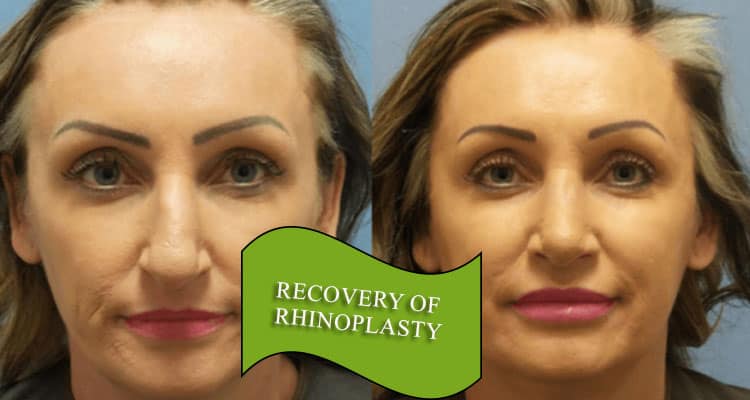
Once you have narrowed down your choices to a few surgeons, start looking through their photo gallery. Look carefully at the pre- and post-rhinoplasty in Iran photos, considering patients with similar facial features to you.
Then ask yourself if you like their outcomes. Do you want something different? Write down some notes and bookmark cases you like best
These pre-and-post surgery images can give you a much more realistic picture of what is possible for your results than 3-D imaging and discussion with the doctor alone. Plus, they can contribute you get an idea of the surgeon’s work.
When you meet an experienced surgeon in person, he or she should be able to provide you with several samples of noses with similar characteristics to you and a range of results depending on your individual wishes
You may also be looking for some more examples outside of your doctor’s website.
Find some examples of the noses you like to see on yourself available in before and after galleries, celebrity faces and other sources. Take those “desirable photos” with you to your consultation session.
3D imaging for rhinoplasty in Iran
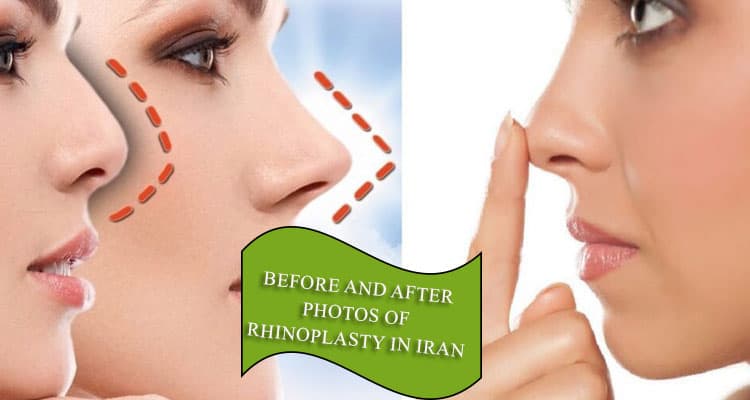
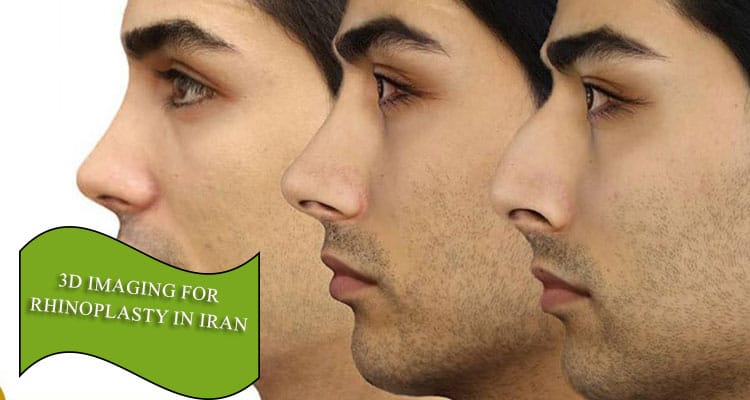
Many surgeons emphasize 3D imaging of rhinoplasty in Iran to help the patient visualize their outcome. However, there are significant drawbacks that patients need to recognize.
There are many patients for revision rhinoplasty in Iran who bring in the image their original surgeon provided but was not able to reproduce. There is a concept that can lead to false expectations and is not necessarily a reflection of the surgeon’s skill.
The dominant belief is that imaging systems have the inherent assumption that the nose is a piece of clay that can be molded in any way.
However, the nose is made up of 5 main cartilages and a bony part that is covered by a skin covering of variable thickness. The skin can at best be minimally changed by thinning slightly, and the framework must have enough strength, which places constraints on what can be done.
The dominant philosophy is to change the cartilage and bony framework to only correct what is displeasing while sustaining structural strength, which leads to a natural result that cannot be fully foreseen by an imaging system. While imaging can be useful, there are examples of pre- and post-op photos of patients with similar noses to give you a more realistic vision of what is reliably achievable.
7.Realistic expectations of results rhinoplasty in Iran
While it is a great idea to bring pictures of rhinoplasty in Iran favorite noses as inspiration to your counseling session, keep in mind that no surgery can make you look like anyone else. In fact, customizing each patient’s results to achieve their aesthetic goals, the following factors must be taken into account:
1.Underlying framework of the nose
2.Skin thickness
3.Other facial features
Because of these factors, no two patient outcomes will be the same – and that’s a good thing. You need to have a natural result that fits your unique face.
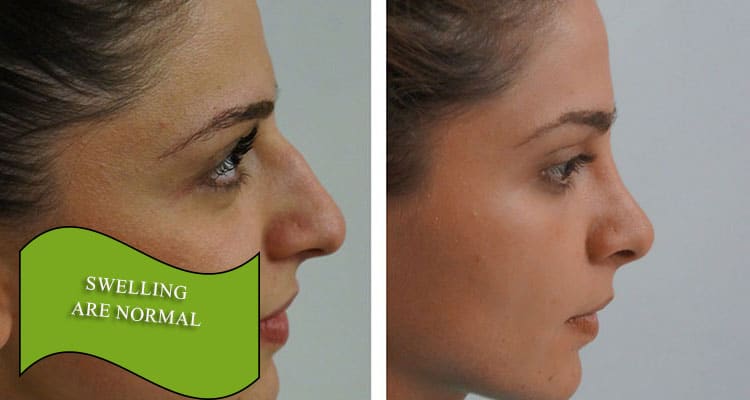
8.Bruising and swelling are normal in the first week
Nose surgery in Iran (rhinoplasty in Iran) has bruising and swelling similar to a broken nose. The area around your eyes turns black after three to five days and the swelling will continue for up to a week. Schedule your surgery around any specific event because it takes at least a few weeks for the swelling and bruising to go away completely.
9.Your final result will be clear after roughly one year
It will not take you that long to heal, but for all of the swelling to go away completely. Many patients are astonished that their noses continue to heal and may go through difficult stages of asymmetry until a year after rhinoplasty in Iran.
10.Do not exercise for a month
An increase in heart rate leads to swelling, and this is exactly what you want to avoid after any surgery. A heart rate of more than 100, which is common in any type of aerobic exercise, is sure to cause swelling of the nose, even bruising and bleeding.
11.Prepare yourself for the symptoms of rhinoplasty
You may be surprised to learn that most rhinoplasty in Iran patients are significantly more comfortable after surgery. In fact, severe pain is very rare.
The main symptoms that make patients more uncomfortable are stuffiness, swelling and bruising that are present in any rhinoplasty procedure. Fortunately, these can be easily controlled with the help of over-the-counter painkillers such as ibuprofen or acetaminophen.
12.Know what is normal
Before fearing that the results of your rhinoplasty in Iran may not be what you expect, take the time to understand what is normal after surgery. Congestion, minor bleeding, swelling, and drowsiness are all normal. But if you experience other symptoms, it is recommended to call your doctor.

13.You will come for follow-up appointment about a week after the nose job in Iran
In this session, your nasal splint will be removed and you will probably have a little pain during this operation.
14.How committed are you to rhinoplasty in Iran?
Having nose job in Iran performed is a process, not an event, especially for patients whose surgical schedules include breaking the nasal bone.
While you’ll initially have a 2-week recovery time period during which you won’t be able to go to work or school, it can take months to completely recover from nasal surgery depending on how invasive your surgical plan is. Are you well-prepared for the commitment to the process you are required to make?
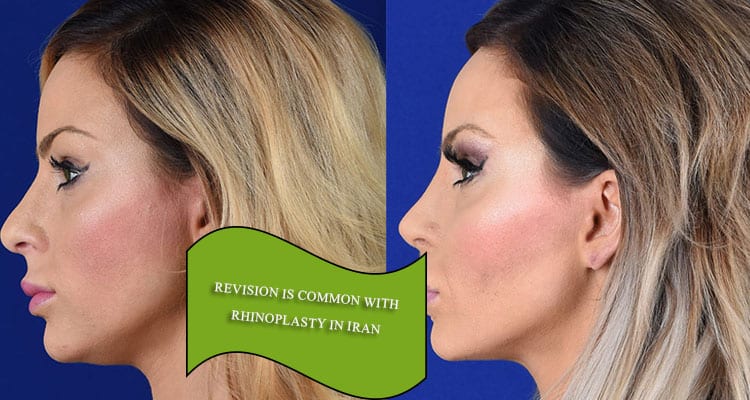
15.Revision is common with rhinoplasty in Iran
Of all plastic surgery in Iran, nose job in Iran and breast augmentation have the highest rate of revision. With breast augmentation, this is because breast implants can rupture or cause side effects.
Women also may simply want to alter the appearance of their breasts as their bodies and preferences change over time.
With nose surgery, the revision rate is high because of the complicated nature of the nose and its ability to improve, even when performed by the most qualified and experienced surgeon.
As a precaution, patients should predict the need for a secondary rhinoplasty in Iran procedure to fine-tune any potential imperfections.
If you are thinking of nose job in Iran, these points should not prevent you from scheduling a consultation. Every patient is unique, and many of the factors of surgery are foreseeable and controllable. The best way to guarantee the best possible results is to select a surgeon with experience and expertise in nose surgery.
16.Am I really ready to look different of rhinoplasty in Iran?
Many patients go for rhinoplasty in Iran regardless of the fact that they will look different afterwards and may take some time. Even if your nose is reshaped exactly the way you wanted it to be, you may not be ready for the shock of seeing it on your face for the first time. Of course, you will adapt to this significant change, but it may take some time.
If you are worried about the shock of that massive change, talk to your plastic surgeon. He or she should be able to give you pictures or predictions of how your nose will look after surgery.
Some surgeons may be able to show you pictures of previous patients with similar nasal structures to help you imagine your new appearance.
To alleviate your anxiety, try visualization to prepare yourself emotionally for the new look you will see. Opportunities are very good that you’re going to like it.
Things not to do before rhinoplasty in Iran
Here are some things you should not do before rhinoplasty in Iran:
1.Drink alcohol at least a week before surgery
Alcohol can change the effect of anesthetic medicine. It can also meddle with correct blood clotting.
2.Smoking – at least one week before rhinoplasty in Iran and during recovery
Substances in cigarette smoke interfere with the respiratory function and metabolism of anesthetics.
3.Expose unprotected skin to ultraviolet light
a few days before surgery and during recovery. Pre-surgery sunburn can increase the risk of inflammation and bleeding. It can also decrease the speed of the recovery process.
4.Complex skin care regimen
at least four days before rhinoplasty in Iran (doctor explains which topical creams, cleansers and makeup to avoid)
5.Eating and drinking after rhinoplasty in Iran
After midnight on the day of surgery to prevent vomiting in response to anesthesia for rhinoplasty in Iran.
- ۰۰/۱۲/۲۳